

Sensory Tools for Inclusive Classrooms: A Practical Guide
Quick Summary
Sensory tools for inclusive classrooms are practical supports that help students with different needs stay regulated, focused and able to take part. Choose them by observing each student's needs, and review them as those needs change. The research on specific tools is still developing, so measure results in your own classroom.
- Observe when students seem restless or withdraw, and note what they reach for on their own.
- Set clear expectations for how fidgets are used before introducing them.
- A 2026 study reports strong student preference for private, sensory-friendly study spaces.
- A calm-down corner works best when it is inviting rather than punitive.
- Start with the categories that match the needs you have already observed.
Table of Contents
- Why Sensory Tools Matter in Inclusive Classrooms
- Matching Sensory Tools to Individual Sensory Profiles
- Fidget and Tactile Tools for Focus
- Sensory Tools for the Classroom: Weighted Items, Headphones and Seating
- Building a Calm-Down Corner Tools for Classrooms Setup
- Classroom Movement Tools for Regulation Breaks
- Low-Cost Sensory Tools for Schools and DIY Options
- Using Sensory Tools Safely and Without Stigma
- Measuring Whether a Sensory Tool Helps
- Choosing Your First Sensory Tools for Your Classroom
- Frequently Asked Questions
Why Sensory Tools Matter in Inclusive Classrooms
Last Updated: October 28, 2026
Sensory tools for inclusive classrooms are no longer a niche resource for special education rooms. They are practical supports that help students with very different needs stay regulated, focused and able to take part. The research base is still developing, and the evidence on specific tools is thinner than many product guides suggest.
A 2025 systematic review evaluated current evidence on sensory-based interventions for children Systematic review of sensory-based interventions for children. The review focuses on whether these approaches help, and it is a useful starting point for any teacher weighing what to try. Read its findings with the limits in mind, since the research available to us does not give a clear measure of effect size for most tools.
The core idea behind sensory tools is simple. Students take in information through touch, movement, sound, light and body position, and some students process that input differently.
Michael's Special Treasures was founded by an autism family.
Matching Sensory Tools to Individual Sensory Profiles
Sensory needs are individual.
Start with observation. Note when a student seems restless, when they withdraw, and what they reach for on their own.
The paper on sensory diets describes these as individualized sensory strategies for students who may need extra regulation University of North Dakota occupational therapy research on sensory-friendly classrooms. The principle matters more than any specific item: the strategy should fit the student, and it should be reviewed as their needs change.
Fidget and Tactile Tools for Focus
Fidget and tactile tools are sensory supports used in classrooms.
Set clear expectations for how fidgets are used.
For a broader look at small sensory items, see our guide to 7 Sensory Items for Autistic Teens That Support Regulation. For tools aimed specifically at anxiety, What Are the Best Sensory Items for Anxiety? goes deeper.
Our Pop Fidget Spinner Toys pack is a sensory toy set. It is lightweight and has smooth edges.

[SCREENSHOT removed]
Sensory Tools for the Classroom: Weighted Items, Headphones and Seating
Beyond fidgets, other categories discussed in sensory-friendly classrooms include weighted items, noise-reducing headphones and alternative seating.
Weighted items, headphones and flexible seating are examples of sensory tools discussed for classrooms.
Research on sensory-inclusive study spaces points in a consistent direction. A 2026 study reports a strong student preference for private, sensory-friendly study spaces, flexible seating and access to natural light Designing sensory-inclusive study spaces, Frontiers in Education. The study does not give a measured outcome, so treat its findings as a guide to what students value rather than proof of academic gains.
Building a Calm-Down Corner Tools for Classrooms Setup
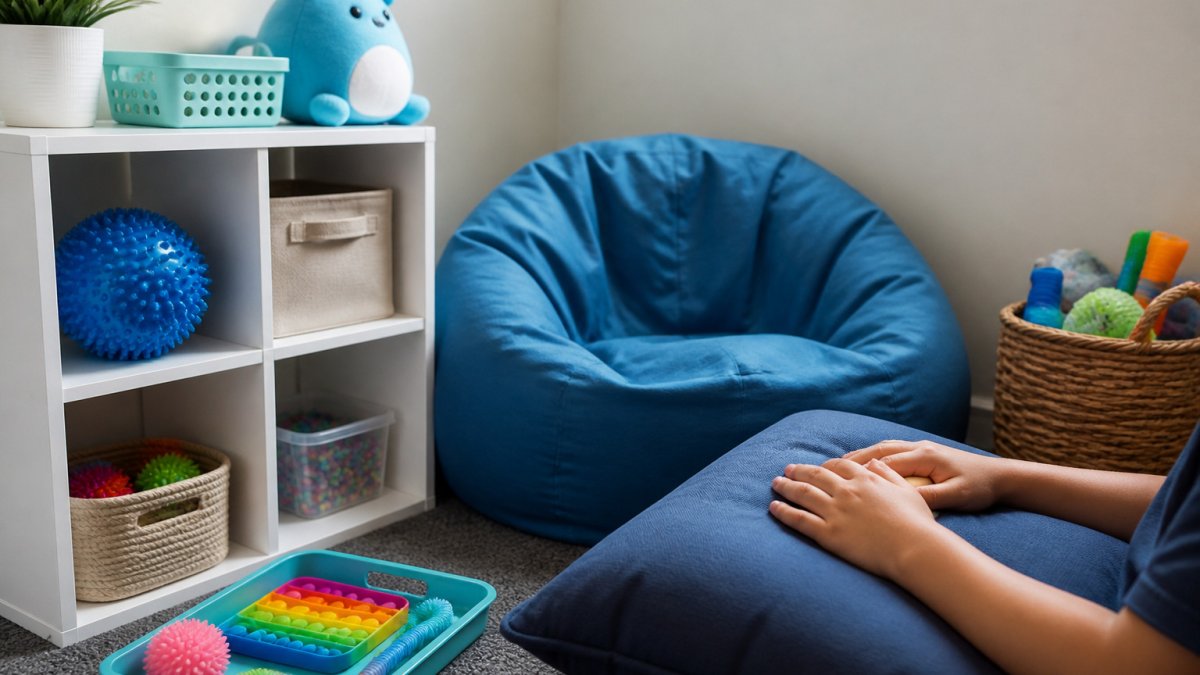
A calm-down corner gives students a designated place to reset. It works best when it is inviting rather than punitive, and when students can use it without having to explain themselves. This section walks through a calm-down corner setup step by step.
Choose the location first. Pick a spot that is visible to an adult but out of the main traffic path, a corner near your desk or a quiet wall away from the door, pencil sharpener and whole-class rug.
Keep the physical setup simple and low-stimulus. A soft seat (beanbag, floor cushion or mat), a small shelf or bin of tools, and low or natural lighting if your room allows it.
VEVOR Sensory Swing for Kids, 3.1 Yards, Therapy Swing for Children →
Introduce it to the whole class, not just one student. Explain what the corner is for and model how to use it.
Set clear use rules. Set clear use rules.
Watch the safety basics. Watch the safety basics.
Classroom Movement Tools for Regulation Breaks
Movement is one type of regulation support discussed for students. A sensory-friendly clothing guide for autism covers comfort-focused options that stay discreet in the classroom.
The VEVOR Elephant Kids Swivel Chair has a 20.5-inch metal base, supports up to 220 lbs, and spins 360 degrees. The VEVOR 3FT Trampoline is foldable, has a 130 lbs maximum weight capacity, and is suitable for children aged 3 and older.


Low-Cost Sensory Tools for Schools and DIY Options
This section discusses low-cost and DIY options for classrooms.
Prioritize by need, not by catalog. Start with the categories that match the needs you have already observed.
Low-cost classroom-safe alternatives.
DIY rules that keep it safe.
What to check before buying.
A simple procurement sequence.
The article's key points on low-cost and DIY options can be compared at a glance.
| Stage | What to do | Key point |
|---|---|---|
| Prioritize | Start with needs already observed | Match categories to needs, not catalog |
| Low-cost options | Choose classroom-safe alternatives | Keep the list short and practical |
| DIY | Follow safety rules | Build only what stays safe |
| Before buying | Check the item | Review fit and safety first |
| Procurement | Follow a simple sequence | Buy in planned, staged order |
Using Sensory Tools Safely and Without Stigma
Safety comes first.
Supporting Sensory Diversity: Building Inclusive Classrooms
Measuring Whether a Sensory Tool Helps
Teachers may choose to observe student behavior when considering a tool.
Choosing Your First Sensory Tools for Your Classroom
Start small. Choose categories that match the needs you have observed.
Frequently Asked Questions
What sensory tools can help students in an inclusive classroom?
Examples discussed for inclusive classrooms include hand fidgets, weighted lap pads, noise-reducing headphones, flexible seating such as wobble cushions or beanbags, and visual supports like picture schedules.
How do sensory tools support learning and self-regulation?
Sensory tools are discussed in relation to sensory input such as deep pressure, movement or quiet.
How can teachers choose sensory tools for different sensory needs?
Sensory diets are described as individualized strategies for students who may need additional regulation.
What are low-cost sensory tools for the classroom?
Low-cost options include homemade fidgets from rice or dried beans in sealed bags, pillows and blankets for a calm corner, paper cup or cardboard visual schedules, chair cushions, and movement cards for quick body breaks. Many of these can be made with donated or recycled materials. Check that any homemade item is secure and cannot be chewed apart or leak small parts that could be a choking hazard.
How can sensory tools be used without distracting other students?
Set clear expectations that tools are for regulation, not play, and keep quiet tools such as hand fidgets or headphones in a designated spot. Give tools to students in a way that does not single anyone out, for example by making a few options available to the whole class. Consistent routines reduce disruption more than the tools themselves.
